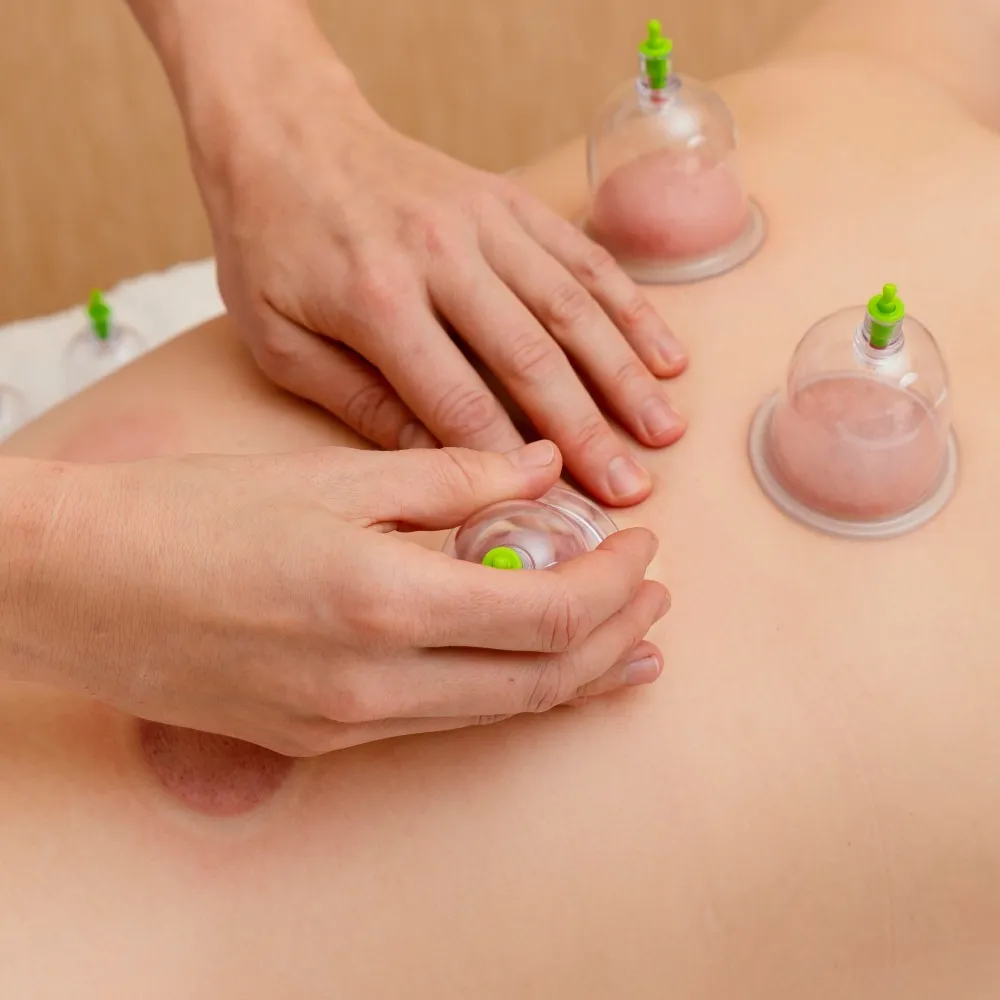
Circular marks on the skin have made Cupping Therapy highly visible in sports and wellness settings, but visibility does not mean that the treatment is appropriate for every type of pain.
For patients in Pune considering cupping as part of physiotherapy, it is useful to understand what the technique involves, what to expect during a session and why it should not automatically replace a broader rehabilitation programme.
What happens during cupping therapy?
Cupping uses specialised cups that create suction against the skin. Depending on the technique, cups may remain in one position for a period or be moved across a treatment area.
The suction can produce temporary skin discoloration or circular marks. These marks are a common reason the treatment is easily recognised.
Why might someone consider cupping?
Some patients seek cupping for temporary relief from muscular tightness or discomfort. In physiotherapy settings, it may sometimes be considered as an adjunct to a wider management plan.
The important word is 'adjunct.'
If a patient's main problem involves reduced strength, poor load tolerance or difficulty returning to specific activities, passive treatment alone does not directly rebuild those capacities.
What should you ask before choosing it?
A sensible consultation should answer several questions:
- What appears to be causing or contributing to my symptoms?
- Why is cupping being considered for this particular problem?
- What should I expect during and after treatment?
- Are there reasons cupping may not be suitable for me?
- What active rehabilitation will accompany the treatment?
These questions help distinguish a clinically considered treatment plan from a technique being used simply because it is popular.
Is cupping suitable for everyone?
No treatment technique is appropriate for every patient.
Skin condition, medical history, medications and other individual factors may affect suitability. A physiotherapist should therefore review relevant history before using the technique.
Patients should also understand the expected temporary skin response rather than being surprised by visible marks afterward.
Look beyond short-term symptom changes
Feeling looser or more comfortable after a session can be useful, but the next question should be whether the person is progressing toward meaningful functional goals.
Can they sit longer comfortably? Has lifting tolerance improved? Can they return to exercise? Are they becoming stronger?
These outcomes provide a broader view of rehabilitation progress.
At Dr Hiremaths Dental And Physiotherapy Clinic in Pune, Maharashtra, Cupping Therapy may be considered only within the context of individual assessment and an appropriate physiotherapy plan.
Patients choosing physiotherapy should look for care that explains why a technique is being used rather than simply offering a menu of treatments. Where cupping is suitable, combining symptom management with appropriate movement, strengthening and activity progression can create a more complete rehabilitation approach.
Keywords