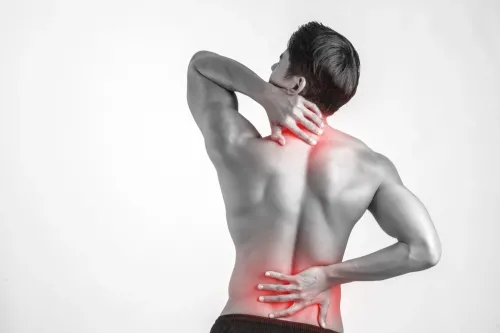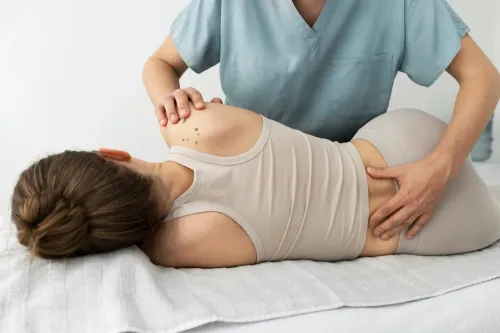

Burning pain, tingling, numbness or weakness in the back and leg can point to nerve involvement, but those symptoms do not identify one diagnosis. You will learn how to recognise urgent warning signs, what assessment should happen before exercise, and how to compare a safe rehabilitation plan with treatments that may worsen nerve symptoms.
Key takeaways
- Progressive weakness needs medical assessment before exercise-based treatment.
- Numbness around the groin or bladder changes require urgent medical care.
- A safe plan combines neurological screening, graded exercise, and regular review.
- Treatment depends on whether pain comes from compression, disease, injury, or surgery.
How neurological back pain differs from a muscle or joint problem
Neurological pain is a pattern, not a single diagnosis. Nerve-root compression can cause sciatica or radicular pain that travels from the lower back into the buttock and leg. Radiculopathy means that travel is accompanied by neurological loss, such as a reduced reflex, altered sensation or weakness. Progressive weakness needs medical review rather than exercise alone.
Spinal stenosis can produce leg pain, heaviness or numbness while you stand or walk, often easing when you sit. Peripheral neuropathy, including diabetic neuropathy, more often affects both feet or follows a stocking-like pattern instead of one nerve root.
Pain after a stroke or spinal cord injury may combine altered sensation, weakness, stiffness and poor control. Burning, electric-shock pain, pins and needles, numbness or weakness along a limb or nerve distribution point more strongly to nerve involvement than ordinary muscle strain.
Local soreness after lifting, pain that stays near the spine, or pain linked to a joint movement fits a different pattern. Consider inflammatory back pain when stiffness lasts a long time, improves with movement, and accompanies alternating buttock pain or another inflammatory condition.
Therefore, back pain treatment neurological pain in Pune must begin with the symptom pattern, followed by testing of strength, reflexes, sensation, walking, balance and nerve tension—not the label alone.
Which symptoms need medical assessment before physiotherapy?
Do not begin physiotherapy until urgent symptoms have been excluded. New bladder or bowel control loss, numbness around the saddle area, or severe or rapidly worsening weakness in both legs can indicate cauda equina syndrome and require emergency surgical review.
Arrange prompt medical review for:
- Fever with severe back pain, unexplained weight loss, major trauma, or a history of cancer.
- Progressive weakness in one leg, even when pain is manageable.
A neurological examination should measure muscle strength, reflexes, light touch and other sensation, walking pattern, balance, coordination, and nerve-tension signs. These findings help distinguish nerve-root pain from muscle or joint pain and guide neurological pain treatment in Pune.
The clinician will ask when symptoms began, whether they travel below the knee, and which positions change them. Mention diabetes, shingles, medication exposure, previous surgery, or stroke, because treating the cause may matter more than reducing pain alone.
| Investigation | What it can show | When it applies |
|---|---|---|
| MRI | Nerve compression, serious disease, or spinal-cord problems | When serious disease is suspected or the result could change specialist treatment |
| X-ray | Fracture or bone alignment | After major trauma or when bone injury is suspected |
| Blood tests | Infection, inflammation, diabetes, or vitamin deficiency | When symptoms or examination suggest an underlying illness |
| Nerve-conduction studies | Peripheral nerve damage | When neuropathy or entrapment requires further evaluation |
Routine imaging is not necessary for uncomplicated low back pain or sciatica when the result will not change management.
What a safe physiotherapy plan for nerve pain includes
A safe plan treats nerve pain as an active, reviewable programme, not a course of passive treatment alone. Physiotherapy for nerve pain in Pune should match your neurological findings, symptom irritability, strength, balance and functional goals.
| Element | Purpose | When it fits |
|---|---|---|
| Education | Explains flare-ups, pacing and sleep positions | At every stage |
| Activity modification | Temporarily reduces prolonged sitting, repeated bending, heavy lifting or positions that sharply increase leg symptoms | During an irritable flare |
| Graded movement | Builds tolerance without unnecessary fear or deconditioning | As symptoms settle |
| Exercise | Uses directional exercises, nerve mobility, trunk and hip strengthening, balance or gait retraining | When examination findings support it |
Manual therapy, if used, belongs inside this exercise-based package; massage or manipulation alone is not a cure. NICE does not recommend traction, acupuncture or transcutaneous electrical nerve stimulation (TENS) for low back pain with or without sciatica.
Your plan should track walking distance, sitting tolerance, sleep, work or household function, leg strength, balance and confidence, not only a pain score. Set a review date and an escalation route. Pain during an exercise does not automatically prove nerve damage, but increasing numbness, spreading symptoms or new weakness requires reassessment.
This is the practical standard for back pain physiotherapy in Pune when rehabilitation is appropriate: progress function gradually, pause activities that sharply worsen leg symptoms, and seek medical review when neurological loss is increasing.
How treatment changes for different neurological causes
Sciatica may respond to graded activity, symptom-guided movement, and trunk or hip strengthening. Progressive weakness is different: it needs physician review, not an exercise-only plan. A treatment plan for neurological pain treatment in Pune must match the neurological findings, not just the pain location.
Diabetic neuropathy requires glucose management, foot protection, and safe balance training. Inspect both feet every day; reduced sensation can hide a blister, pressure injury, or infection. Post-stroke weakness may need task-specific strengthening, weight transfer, balance work, and gait practice, adjusted for fatigue and spasticity.
Post-operative nerve symptoms must follow the surgeon’s restrictions on lifting, bending, wound care, and progression. Spinal cord conditions need coordinated medical and rehabilitation planning because weakness, sensation, bladder function, and pressure-risk management can change together. Medication-related neuropathy, vitamin B12 deficiency, shingles, and entrapment neuropathy require investigation of the cause as well as symptom treatment.
- Discuss amitriptyline, duloxetine, gabapentin, or pregabalin with a prescriber; these medicines can cause sedation, dizziness, or swelling.
- Do not start, stop, or combine them without medical advice.
- Do not transfer this advice to sciatica: NICE advises against gabapentinoids for sciatica and opioids for chronic sciatica.
- During an acute flare, avoid forcing a painful stretch, repeated bending or twisting, heavy lifting, or progression when weakness is worsening.
Pain during exercise does not automatically mean nerve damage, but worsening numbness, spreading symptoms, or new weakness requires reassessment.
How to choose and review neurological back-pain care in Pune
Choose a provider who examines you before prescribing exercises. Ask for documented findings on strength, reflexes, sensation, walking, balance and nerve tension, not only a pain score.
Ask these questions before starting physiotherapy for nerve pain in Pune:
- What finding would trigger an MRI, blood tests, nerve-conduction studies or physician referral?
- Which movements should I pause during a flare?
- How often should I perform each home exercise?
- When will you review progress and change the plan?
A useful plan sets functional targets: walking for 20 minutes, sitting through a work task, climbing stairs, sleeping better or returning to household duties. It does not promise a fixed session count or a guaranteed cure.
| Option | What it means | When it applies |
|---|---|---|
| Physiotherapy review | Exercise-based care with recorded neurological findings and a review date | Stable symptoms without red flags |
| Medical assessment first | Examination and investigation before routine rehabilitation | New bladder or bowel loss, saddle numbness, severe or progressive weakness, fever, major trauma, unexplained weight loss or cancer history |
| Escalation during care | Stop and reassess rather than progressing exercises | New weakness, spreading numbness or persistent disabling symptoms |
Dr Hiremaths Dental And Physiotherapy clinic may suit Pune residents seeking dental and physiotherapy services in one clinic, provided its consultation includes neurological screening, condition-specific planning and a clear escalation route. The same standard applies to any provider. For back pain treatment neurological pain in Pune, reassess persistent or recurrent symptoms even when pain fluctuates.
Related services
Physiotherapy Get personalized physiotherapy for back pain and reclaim your active life. View service → |
Physiotherapy Recovering from surgery? Our post-surgical rehab program helps you regain strength, mobility, and independence. View service → |
Frequently asked questions
How does neurological back pain differ from a muscle or joint problem?
Neurological pain can travel from the back into the buttock or leg and may include tingling, numbness, altered reflexes, or weakness. Muscle or joint pain usually stays closer to the affected area and does not cause neurological loss.
Which symptoms need medical assessment before physiotherapy?
Seek medical assessment before physiotherapy for progressive weakness, significant loss of sensation, difficulty walking, fever, unexplained weight loss, recent major trauma, or a history of cancer. Numbness around the groin, new bladder or bowel problems, or rapidly worsening symptoms require urgent care.
What does a safe physiotherapy plan for nerve pain include?
A safe plan starts with a neurological examination of strength, sensation, reflexes, walking, and symptom behaviour. It can then use graded movement, activity modification, posture or lifting guidance, and exercises that are reviewed if leg pain, numbness, or weakness increases.
How does treatment change for different neurological causes?
Treatment differs for nerve-root compression, peripheral nerve problems, spinal cord disease, neuropathy, or recovery after surgery. The cause, neurological findings, medical treatment, and recovery stage determine the exercises, precautions, referral needs, and review schedule.
Related service
Physiotherapy Improve your balance, mobility, and confidence with our Balance and Gait Training program. View service → |
Keywords