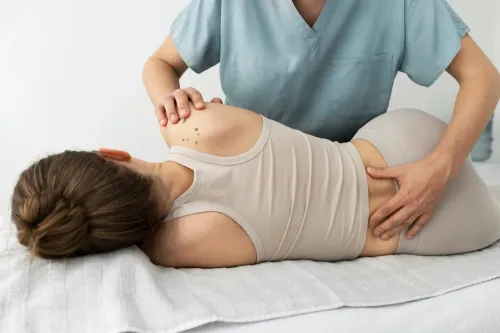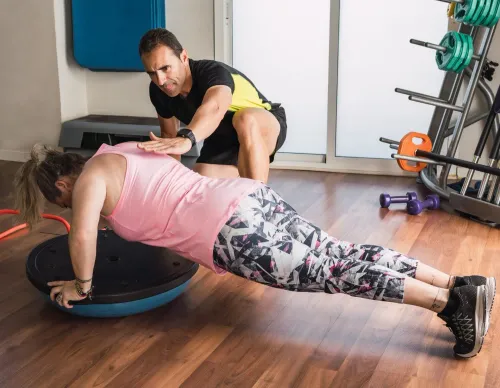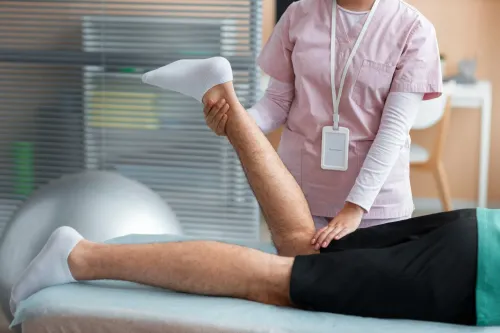

Recovery after neck or shoulder surgery depends on the tissue repaired, the operation performed, and the restrictions set by your surgeon—not on a generic exercise sheet. You will learn how to prepare for physiotherapy, recognise the phases of recovery, protect the repair, identify warning signs, and compare rehabilitation providers safely.
Key takeaways
- Rehabilitation differs after cervical, shoulder, breast, and chest operations.
- Progress from protection to mobility and strengthening only after clinical assessment.
- Contact the surgeon for wound changes, fever, weakness, or worsening neurological symptoms.
- Compare Pune providers by surgical experience, assessment methods, and communication with your surgeon.
Which Operations Need This Kind of Rehabilitation?
The operation determines the rehabilitation pathway; post surgical rehab neck and shoulder pain in Pune is not one standard programme.
| Operation | Main rehabilitation concern | Why the plan differs |
|---|---|---|
| Cervical decompression | Protect the healing neck while restoring safe movement | Nerve symptoms, lifting limits, and collar use vary |
| Cervical fusion | Protect the fusion and adjacent tissues | The level fused, bone healing, and surgeon’s restrictions control progress |
| Cervical disc replacement | Restore function without stressing the implant | Neck movement and loading restrictions differ from fusion |
| Rotator-cuff repair | Protect the repaired tendon | Tear size, tissue quality, fixation, and immobilisation change movement timing |
| Labral repair | Protect the repaired shoulder stabiliser | Sling duration and limits on rotation, reaching, and loading depend on the repair |
| Shoulder replacement | Protect the joint and repaired soft tissues | Anatomic and reverse replacements have different precautions |
| Fracture fixation | Protect bone and fixation while preventing stiffness | Fracture location, stability, and weight-bearing instructions are decisive |
The repaired tissue, surgical technique, operative findings, immobilisation period, and surgeon’s written restrictions take priority over a generic exercise sheet. Treatment begins only after the physiotherapist reviews those instructions and confirms any required medical clearance.
Bring these documents and instructions to your first appointment:
- Operation report and discharge summary
- Recent imaging and the medication list
- Wound-care instructions
- Permitted neck or shoulder movements
- Lifting and weight-bearing restrictions
- Collar or sling instructions
- The surgeon’s contact details
Ask the therapist to identify the exact operation-specific protocol before exercises begin. A restriction such as no overhead reaching, external rotation, driving, or arm loading can protect the repair from an avoidable setback.
What Happens During the Protection, Mobility, and Strengthening Phases?
The protection phase keeps the repair safe while you regain basic independence. Follow wound-care instructions, use the prescribed sling or cervical collar, walk in short intervals, practise breathing, maintain supported posture, and use safe bed and chair transfers. Avoid loads that stress the repair, including pushing up through the arm.
The mobility phase begins only with movements approved by the surgeon: assisted shoulder motion after selected shoulder procedures or carefully controlled neck movement after cervical surgery. Do not force range through pain. Early aggressive exercise can overload a healing tendon, fracture fixation, or surgical repair.
Confirm whether your current protocol restricts:
- Overhead reaching
- Behind-the-back movement
- Weight-bearing through the arm
- Lifting
- Driving
- Sleeping on the operated side or without the prescribed support
The schedule changes with the operation and tissue healing:
| Operation | Why progression differs |
|---|---|
| Rotator-cuff repair | The tendon needs protected motion before active elevation and resistance. |
| Shoulder replacement | Extension, rotation, lifting, and weight-bearing limits depend on the implant, approach, and subscapularis repair. |
| Cervical surgery | Walking and posture work may start before stretching, lifting, or driving clearance. |
| Fracture fixation | Loading waits for fixation stability and healing evidence. |
The strengthening phase adds active motion, endurance, and resistance after healing and medical clearance support it. The return-to-function phase practises dressing, bathing, desk work, reaching, lifting, sport, and your personal goals.
A sound post surgery physiotherapy in Pune plan follows the written protocol, not a fixed calendar. Neck shoulder rehabilitation in Pune should also adjust exercises when pain, weakness, or daily tolerance changes.
What Should an Assessment Measure Before Exercises Progress?
A safe progression starts only after the surgeon’s instructions and procedure-specific medical-clearance requirements have been reviewed. The assessment must establish what is healing, what is restricted, and what function you can tolerate today.
1. Record pain location and behaviour: neck, shoulder, arm, movement-related, constant, night pain, or worsening symptoms. Measure cervical and shoulder range of motion, strength, swelling, posture, scar or wound status, sensation, reflexes, and other neurological findings.
2. Test useful tasks rather than pain alone: dressing, reaching, walking, desk work, lifting within restrictions, and sleep. Cervical nerve-root irritation can create arm or shoulder symptoms, while shoulder pain can drive neck-muscle overactivity; assessing both regions prevents treatment of the wrong source.
3. Track progress with a pain rating, cervical range of motion, neurological findings, functional tolerance, and the Neck Disability Index. Use SPADI when shoulder pain or disability is a major part of the problem. Better sleep, arm symptoms, work tolerance, or movement capacity can show improvement before pain disappears.
For uncomplicated neck pain rehab in Pune, education should accompany active cervicoscapulothoracic strengthening, endurance, mobility, and motor-control training. Manual therapy or passive modalities can support selected cases, but neither replaces progressive exercise and functional retraining.
Do not use high-velocity neck manipulation until instability, fracture, infection, neurological deterioration, postoperative precautions, and an unhealed fusion have been excluded.
Which Symptoms Need the Surgeon Rather Than Another Exercise?
Temporary soreness, stiffness, weakness, poor sleep, and reduced daily function can follow surgery. Improvement is judged by the trend: better movement, sleep, arm symptoms, walking, and activity tolerance matter more than immediate pain elimination.
| Expected after surgery | Contact the operating team urgently |
|---|---|
| Soreness or stiffness that eases between sessions; weakness that gradually improves | New or worsening arm or leg weakness; persistent numbness; sudden loss of function |
| Sleep disruption and limited dressing, reaching, walking, or desk work that slowly improve | Loss of bladder or bowel control; chest pain; severe difficulty breathing or swallowing |
| Tenderness around a healing wound | Fever, wound drainage, increasing redness, severe swelling, or rapidly increasing neck swelling |
| Pain that settles with the prescribed plan | Disproportionate or rapidly worsening pain, especially after a new exercise or load |
Stop exercises when a red flag appears. Do not wait for a routine physiotherapy appointment; contact the operating team or use the emergency instructions supplied at discharge. If you are seeking shoulder pain physiotherapy in Pune, take the surgeon’s restrictions and emergency contact details to every visit.
After cervical surgery, walking, breathing, posture, and safe daily-movement practice may be appropriate while aggressive neck stretching waits for clearance. After shoulder surgery, increasing pain after a new load can signal that the exercise level is wrong. Follow the surgeon’s instructions rather than pushing through symptoms.
How Can You Compare Rehabilitation Providers in Pune?
Choose a provider who can explain the operation-specific protocol, not one who offers the same exercise sheet after every procedure. For post surgery physiotherapy in Pune, ask whether the plan reflects your repair, immobilisation period, operative findings, and surgeon’s written restrictions.
- Which movements and loads are prohibited now, including overhead reach, behind-the-back movement, lifting, weight-bearing, driving, or neck stretching?
- How will you communicate with the surgeon, and when will you contact them if pain, weakness, range of motion, or function worsens?
- How will you record cervical and shoulder range of motion, strength, neurological symptoms, sleep, work tolerance, and daily activities?
- Will you use the Neck Disability Index for neck problems or SPADI for shoulder problems, alongside pain ratings and task performance?
| Check | Credible answer | Warning sign |
|---|---|---|
| Protocol | Names the procedure-specific precautions and progression criteria | “We use one routine for everyone” |
| Assessment | Examines the neck, shoulder, arm, sensation, strength, and movement chain | Treats only the painful spot |
| Progress | Rechecks measures at defined milestones | Relies on pain relief alone |
| Escalation | States when the surgeon or another clinician will be contacted | Promises uninterrupted treatment |
For shoulder pain physiotherapy in Pune or neck shoulder rehabilitation in Pune, confirm that the therapist assesses the entire upper-quarter chain: cervical nerve irritation can mimic shoulder symptoms, while shoulder pain can overload neck muscles.
Dr Hiremaths Dental And Physiotherapy clinic can be compared with other providers using these questions and by confirming work within the surgeon’s restrictions.
A credible plan has procedure-specific safeguards, measurable milestones, progressive functional retraining, and timely referral—not a fixed session count or instant pain-relief promise.
Related service
Physiotherapy Recovering from surgery? Our post-surgical rehab program helps you regain strength, mobility, and independence. View service → |
Frequently asked questions
Which operations need neck and shoulder rehabilitation?
Cervical spine, shoulder, breast, chest, and upper-limb operations can restrict neck and shoulder movement and require surgery-specific rehabilitation.
What happens during protection, mobility, and strengthening phases?
Protection limits strain while tissues heal; mobility restores safe movement; strengthening rebuilds control and load tolerance after the surgeon permits progression.
What should an assessment measure before exercises progress?
Assessment should measure pain, wound status, range of motion, strength, sensation, swelling, posture, function, and the surgeon’s movement restrictions.
Which symptoms need the surgeon rather than another exercise?
Contact the surgeon for fever, drainage, wound opening, increasing redness, new arm weakness or numbness, severe swelling, chest pain, or worsening pain.
How can you compare rehabilitation providers in Pune?
Ask about experience with your operation, assessment records, progression criteria, home exercises, emergency advice, and communication with your surgeon.
Keywords