A weak or poorly controlled trunk can make it harder to shift your weight, place each step, turn, and recover when the ground or your balance changes. You will learn which core exercises transfer to walking, how to combine them with balance and leg training, how to measure progress, and when gait changes require medical assessment first.
Key takeaways
- Train trunk control alongside balance, leg, and walking exercises.
- Progress from supported positions to standing and task-specific movements.
- Measure walking speed, step symmetry, balance time, and daily function.
- Seek assessment before exercising after sudden or unexplained gait changes.
How Trunk and Pelvic Control Affect Balance and Walking
Your trunk is the link between your legs and the ground. Trunk muscles keep your rib cage and pelvis aligned as your weight moves over one leg, while hip and abdominal muscles control unwanted rotation or side-to-side sway.
Good pelvic control helps you place each foot at the right distance and direction instead of taking short, wide, or hesitant steps.
During walking, balance depends on a sequence:
- Before lifting one foot, your trunk shifts the pelvis and centre of mass toward the supporting leg.
- As the free leg moves, your trunk limits excessive twisting so the foot lands where you intended.
- If you trip or meet an uneven surface, rapid trunk and hip adjustments help you widen, shorten, or redirect the next step.
Core strength means producing force; core endurance means maintaining control through repeated steps. Trunk control means using that strength at the right time. They are not interchangeable, and stronger abdominal muscles alone do not automatically improve walking if pain, leg weakness, sensory loss, or vestibular symptoms disrupt movement.
Core muscle strength and fitness training can provide balance and gait benefits, but the strongest practical gains usually come when it supplements progressive balance challenges, leg strengthening, and walking practice. Isolated planks may improve endurance without teaching your body to recover from a misplaced step.
What Core Training Looks Like and How It Progresses
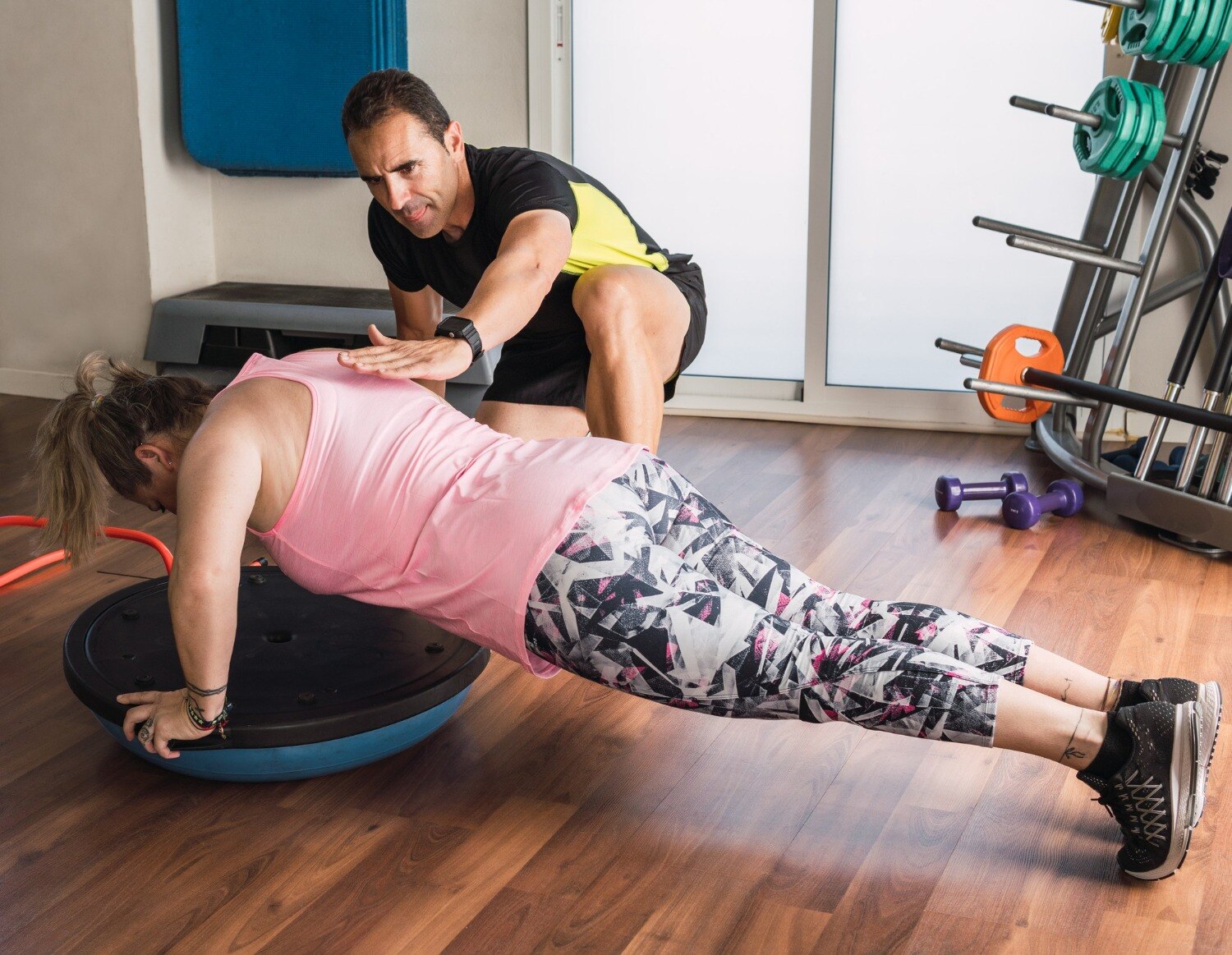
Useful trunk training teaches you to keep the pelvis and ribcage controlled while your arms and legs move. Dead-bug variations, supported bridges, bird-dog exercises, controlled weight shifting, and sit-to-stand drills build this skill more directly than sit-ups alone. Step-ups and resisted walking add trunk control to tasks that resemble daily movement.
Core muscle strength and fitness training should also address endurance, hip strength, and movement coordination. Stronger abdominal muscles do not automatically improve walking if you still lose balance during turns, misplace a step, or avoid loading one leg. Core strengthening physiotherapy therefore links each exercise to a functional goal.
- Start with slow, supported movements and stop when your pelvis twists, your back arches, or you need to hold your breath.
- Progress by changing one demand at a time: repetitions, hold time, resistance, speed, base of support, visual input, or a second task such as carrying an object.
- Add reaching, stepping, uneven surfaces, walking turns, and direction changes after you can control the simpler version safely.
| Progression lever | Easier version | Harder version |
|---|---|---|
| Resistance | Body weight | Band, cable, or light load |
| Base of support | Feet apart | Narrow stance, tandem stance, or single-leg loading |
| Movement demand | One limb moves | Opposite arm and leg move together |
| Attention | Focus only on posture | Walk, turn, or count while maintaining control |
Longer planks are only one option. Progress when movement quality and walking function improve, not merely when you can endure more seconds.
How Core Work Fits With Balance, Leg, and Walking Training
Core strengthening trains trunk control; balance and gait training rehearses stability during movement; leg strengthening builds force; aerobic conditioning builds endurance; a walking aid changes support and safety rather than muscle capacity.
| Option | Main target | What it changes |
|---|---|---|
| Core strengthening | Abdominal, back, and pelvic control | Helps keep the trunk steady during reaching, weight shifts, and stepping |
| Balance and gait training | Stability, step placement, turning, and recovery | Practises walking, obstacles, uneven surfaces, direction changes, and dual-tasking |
| Leg strengthening | Hip, knee, and ankle force | Improves rising, stair climbing, push-off, and controlled lowering |
| Aerobic conditioning | Heart and lung endurance | Delays fatigue during longer walks but does not replace balance practice |
| Walking aid | External support and load sharing | Improves safety or reduces joint loading while you address the underlying limitation |
A plank or dead bug can improve trunk endurance without changing how you turn, cross an uneven surface, or recover from a trip. That gap is why core exercises should supplement, not replace, balance and gait training.
Combine progressive resistance exercises such as bridges, sit-to-stands, and step-ups with walking practice and balance challenges. Increase resistance, repetitions, movement speed, or task difficulty gradually; practise demanding tasks beside stable support or with a clinician rather than training through repeated falls.
A walking aid must match your strength, balance, and environment. Incorrect height or poor technique can increase tripping, so have a physiotherapist assess and adjust it. Pairing exercise with footwear, vision, medication, and home-hazard reviews is important when fall risk is substantial.
How to Find the Main Contributor and Measure Improvement
Gait problems treatment starts by matching the walking pattern to its likely limiting factor, not by assuming weak abdominals are responsible. A clinician watches level walking, turns, uneven surfaces, transfers, and recovery from a small balance challenge.
- Trunk-control problem: the body sways, the pelvis drifts, or step placement changes when reaching or turning.
- Leg weakness: one side cannot rise from a chair, climb stairs, or clear the foot despite manageable pain.
- Pain or joint restriction: speed and stride shrink around a painful hip, knee, ankle, or limited joint range.
- Vestibular symptoms: head movement triggers spinning, nausea, or veering; medication effects cause sedation, low blood pressure, or slowed reactions.
- Sensory loss or neurological disease: numb feet impair foot placement, while Parkinsonian, stroke-related, cerebellar, or rapidly changing patterns need medical assessment.
| Test | What it measures | Meaningful progress |
|---|---|---|
| Comfortable and fast walking speed | Functional gait capacity | Faster speed without shorter steps or unsafe compensations |
| Timed Up and Go | Rising, walking, turning, and sitting | Less time with steadier turning |
| Five-times sit-to-stand | Leg strength and transfer control | Less time without pushing from the arms |
| Tandem stance, turning, or stairs | Balance and task-specific control | Fewer errors, pauses, or hand supports |
Record pain, dizziness, assistive-device use, and medication timing beside each result. A longer plank proves local endurance, not better community walking; progress matters when walking, turning, and daily tasks improve. Core weakness may contribute, but it is rarely the sole explanation.
When Gait Changes Need Medical Assessment Before Exercise
Stop exercise and seek emergency care for a new inability to walk, one-sided weakness or numbness, speech or vision changes, fainting, chest pain, severe headache, or sudden severe dizziness. These symptoms can signal stroke, heart or circulation problems, or another urgent condition.
Arrange prompt medical assessment for rapidly worsening unsteadiness, repeated unexplained falls, or a sudden change in walking. Core strengthening cannot correct every cause; gait problems treatment must identify whether weakness, pain, sensory loss, vestibular dysfunction, medication effects, or a neurological condition is driving the change.
| Situation | Action | Exercise restriction |
|---|---|---|
| Emergency warning signs | Seek emergency care now | Do not exercise while waiting |
| New falls or worsening gait | Obtain clinical assessment | Avoid unsupervised balance challenges |
| Recent surgery | Follow the surgeon’s written restrictions | Do not add resistance, twisting, loaded bending, floor transfers, or impact until cleared |
After surgery, the operation and healing stage determine limits. Use the surgeon’s weight-bearing, lifting, wound, brace, and movement instructions rather than a generic core routine.
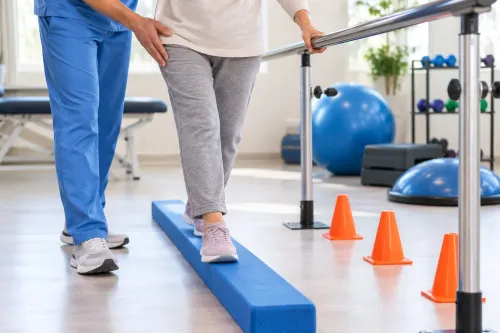
Supervised physiotherapy is safer when you need a walking aid, lose balance during turns, cannot control weight shifting, or practise on uneven surfaces. Dr Hiremaths Dental And Physiotherapy clinic can help match core strengthening physiotherapy to your current control, surgical restrictions, and walking goals.
Progress only when movement stays controlled and falls are not part of the practice.
Related service
Physiotherapy Improve your balance, mobility, and confidence with our Balance and Gait Training program. View service → |
Frequently asked questions
How does trunk and pelvic control affect balance and walking?
Trunk and pelvic muscles keep your rib cage and pelvis aligned as your weight shifts between legs, limiting sway and unwanted rotation.
What does core strengthening physiotherapy involve?
It may begin with controlled breathing, abdominal activation, pelvic control, and supported movements before progressing to standing and walking tasks.
How does core training fit with balance, leg, and gait training?
Core work provides a stable base, but effective gait rehabilitation also trains leg strength, balance reactions, stepping, and walking practice.
How can you measure improvement in gait problems?
Track walking speed, step length, sit-to-stand performance, single-leg or tandem stance time, falls, and confidence during daily activities.
When should gait changes receive medical assessment before exercise?
Seek assessment for sudden gait changes, new weakness or numbness, severe pain, dizziness, repeated falls, loss of bladder control, or trouble speaking.
Keywords