Cupping may ease soreness or the feeling of muscle tightness, but that does not prove better balance, faster walking, longer steps, or fewer falls. By the end, you will know when it could complement active rehabilitation, what a session involves, which safety questions to ask, and how to compare a local service with evidence-based gait training.
Key takeaways
- Treat cupping as an adjunct, not a proven method for improving gait or balance.
- Ask which cupping technique is offered and how it supports your rehabilitation goals.
- Check skin, bleeding, infection, medication, and circulation risks before treatment.
- Compare clinics by assessment quality, physiotherapy credentials, hygiene, and measurable gait goals.
What cupping can—and cannot—do for walking ability
Cupping does not directly prove improvement in balance, gait speed, step length, lower-limb control, walking confidence, or fall risk. High-quality evidence for these outcomes remains limited, so cupping therapy balance and gait training in Pune should treat cupping as an optional adjunct for short-term soreness or perceived muscle tension.
Less discomfort can make a walk feel easier, but that is not the same as better postural control. A person may report relief while their balance reactions, foot placement, and ability to recover from a trip remain unchanged.
Measure walking ability separately:
- Test gait speed, step length, step symmetry, and lower-limb control before and after the programme.
- Check walking distance, turning ability, foot clearance, and confidence during real tasks.
- Record falls and near-falls over time instead of assuming that reduced soreness lowers fall risk.
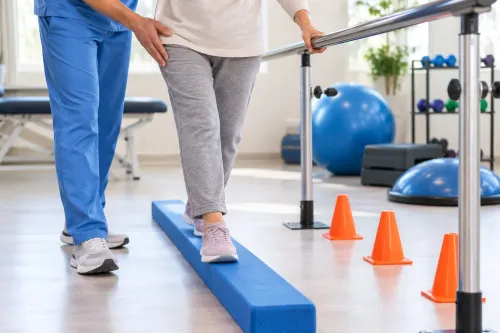
In balance and gait training in Pune, repeated, progressive practice drives rehabilitation. That practice can include standing balance, weight shifting, strengthening, transfers, turning, and task-specific walking. Passive treatment alone cannot replace it.
After stroke, Parkinson disease, vestibular problems, arthritis, pain, or deconditioning, the right programme targets the cause of the walking problem. Cupping may be worth considering when soreness or perceived tightness obstructs practice, but stop treating it as a way to restore neurological control or prevent falls without objective improvement.
Where cupping might fit into an active mobility programme
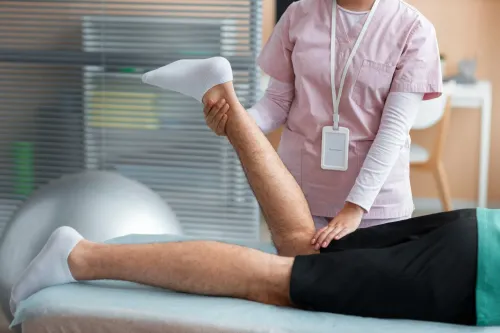
Cupping belongs after a gait assessment, not before it. Compare joint range, muscle strength, pain, step pattern, foot clearance, stance time, and movement quality to decide whether tightness actually limits walking.
The assessment determines both the treatment site and technique; a search for cupping therapy in Pune is not a reason to treat every tight muscle.
| Site | What the physiotherapist may examine | Possible role |
|---|---|---|
| Calf | Ankle range, push-off, foot clearance | Cupping or manual work if tension restricts ankle movement |
| Hamstrings or quadriceps | Knee range, strength, step length | Short-term comfort before active exercise |
| Hip muscles | Pelvic control, stance stability, step symmetry | Support movement practice when pain limits loading |
| Plantar foot | Foot pressure, balance reactions, pain | Selected treatment if foot discomfort alters stepping |
| Lower back | Trunk movement, pain, posture | Consider only when symptoms affect gait |
A suitable balance training physiotherapy in Pune programme keeps the active task central:
- Assess gait, then use selected cupping or manual work for the identified restriction.
- Follow with stretching, strengthening, coordination drills, sit-to-stand and transfer practice.
- Progress to turning, obstacle negotiation, stairs, treadmill work, walking-aid training, and balance exercises.
The physiotherapist should repeat the walking task after treatment to check whether movement changed, rather than relying on a relaxed feeling or temporary soreness relief. Cupping supports rehabilitation only when it helps you practise the task more effectively; it does not replace progressive walking and balance work.
What happens during treatment, and which type is being offered
Expect screening before any cup touches your skin. A safe cupping therapy in Pune session includes medical and medication screening, a falls and mobility review, inspection of skin and sensation, and informed consent explaining discomfort, bruising, and alternatives.
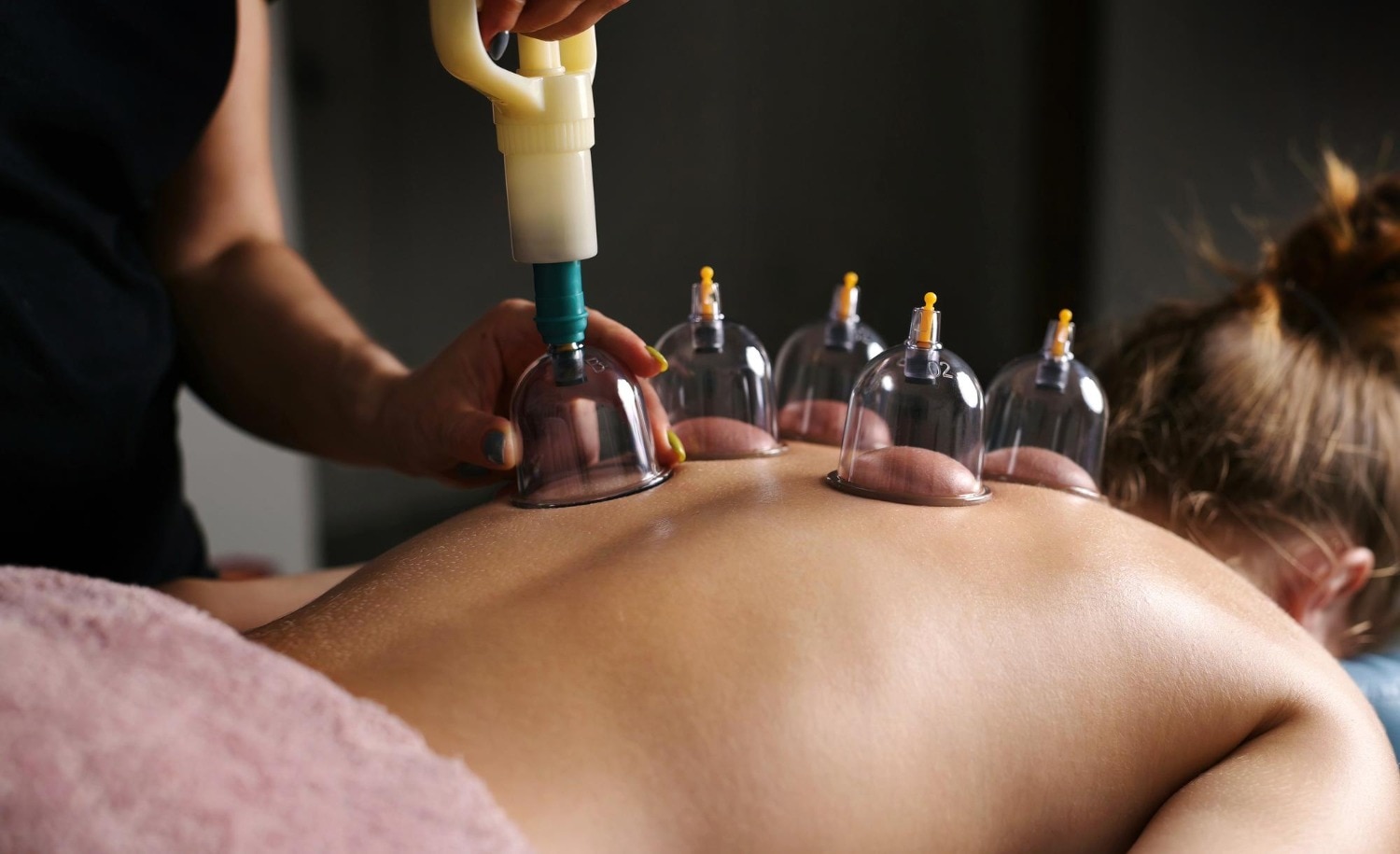
For gait rehabilitation, dry cupping is the appropriate offered option unless a qualified clinician identifies another reason. The differences are practical:
| Option | What happens | Main concern |
|---|---|---|
| Dry cupping | Suction is applied without breaking skin | Pulling, pressure, mild tenderness, circular bruising |
| Massage cupping | Lubricated cups are moved across the skin | Friction can irritate sensitive skin |
| Wet cupping | Skin is punctured and blood enters the cup | Bleeding, infection, and anaemia risk |
| Fire cupping | Heat creates suction inside the cup | Burns and blisters |
The practitioner places cups on selected areas for a defined period, removes them, checks the skin, gives aftercare instructions, and then progresses into movement practice. You may feel pulling or pressure. Circular bruises or discoloration can last several days to about two weeks.
Marks usually do not prevent walking. Stop strenuous exercise and seek assessment if tenderness is substantial, skin blisters, irritation persists, or the area becomes hot or infected-looking.
Ask which technique is being offered, why it suits your mobility assessment, and how it will support walking practice rather than replace strengthening, balance work, or gait training.
Safety checks before adding cupping to gait rehabilitation
Delay cupping over open wounds, infected skin, active dermatitis, recent surgical sites, areas with poor sensation or impaired circulation, and any unexplained skin change until a qualified clinician assesses it. Avoid treatment during pregnancy unless medically reviewed, especially over the abdomen or lower back.
- Give the practitioner your diagnoses and medicines. Anticoagulants, antiplatelet medicines, bleeding disorders, and significant anaemia increase bruising or bleeding risk; wet cupping, which punctures skin, needs medical advice first. Repeated wet cupping can worsen anaemia.
- Inspect the proposed sites and ask what will happen if skin becomes painful. Stop and seek assessment for burns, blisters, persistent irritation, spreading redness, discharge, fever, or worsening pain.
- Confirm infection control before wet cupping: are blades single-use, are reusable cups sterilised, are gloves and sharps-disposal containers visible, and is there an emergency plan for bleeding, fainting, burns, or allergic reactions?
- Ask whether a doctor or neurologist should review unexplained weakness, new tremor, sudden balance loss, recurrent falls, numbness, rapidly changing gait, or symptoms suggesting stroke or another neurological disorder.
Fire cupping adds a burn hazard unrelated to your balance problem. Do not accept treatment over skin that cannot reliably report heat or pressure. A safe plan records baseline walking and balance findings, explains consent and aftercare, and keeps active gait practice as the main intervention.
Searchers comparing cupping therapy balance and gait training in Pune should verify these checks rather than judge safety by location or promised results.
How to compare a Pune clinic before you book
Choose the clinic by its assessment and progression, not its Pune address. A credible balance training physiotherapy in Pune service names the clinician supervising treatment, their physiotherapy or medical qualifications, how falls risk is assessed, and when a doctor or neurologist is needed.
| Check | Credible service | Warning sign |
|---|---|---|
| Supervisor | Named physiotherapist or medically qualified clinician | “Expert therapist” with no credentials |
| Progress tracking | Repeats falls history, sit-to-stand performance, gait speed, Timed Up and Go, Berg Balance Scale, or Functional Gait Assessment | Relies only on how you feel |
| Cupping decision | Defines an outcome that justifies continuing it, such as less pain during walking | Promises to correct a limp or prevent falls |
Ask whether the programme includes task-specific walking, progressive balance work, strengthening, turning, stairs, obstacle practice, and an appropriate walking aid. Those active tasks—not passive treatment—should remain the core of rehabilitation.
Also ask about informed consent, skin checks, single-use blades for wet cupping, sterilisation of reusable cups, visible gloves and sharps disposal, and an emergency plan. Stop cupping if it causes blistering, infection, persistent irritation, or no measurable walking benefit.
Dr Hiremaths Dental And Physiotherapy clinic is one local option to question about assessment, supervision, infection control, and active rehabilitation rather than assume cupping alone will improve gait. A genuine gait training clinic in Pune will show how treatment choices connect to repeated functional results.
Related service
Physiotherapy Improve your balance, mobility, and confidence with our Balance and Gait Training program. View service → |
Frequently asked questions
Can cupping improve walking ability, balance, or fall risk?
Cupping does not directly prove improvement in balance, gait speed, step length, lower-limb control, walking confidence, or fall risk. Evidence for these outcomes remains limited, so use it only as an optional adjunct.
Where can cupping fit into a mobility programme?
A physiotherapist may consider cupping alongside balance exercises, gait drills, strengthening, mobility work, and fall-prevention training when short-term soreness or perceived muscle tension is the concern.
What should you ask about the cupping treatment?
Ask which type is being offered, what body area will be treated, how long cups remain in place, what marks or soreness to expect, and how the session connects to your gait goals.
What safety checks matter before cupping?
Discuss skin problems, active infection, bleeding disorders, blood-thinning medicines, poor circulation, reduced sensation, pregnancy, and healing problems before treatment. Do not proceed over broken or infected skin.
How do you compare a gait training clinic in Pune?
Choose a clinic that performs an individual assessment, explains risks, sets measurable mobility goals, provides active rehabilitation, maintains hygiene, and tracks changes in walking or balance.
Keywords