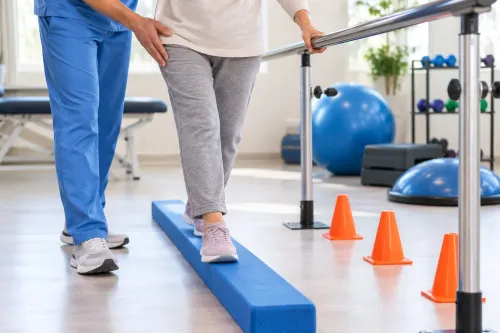

Exercise is usually the foundation for managing osteoarthritis-related back pain, but it is not automatically safe or suitable for every pain pattern. By comparing symptoms, warning signs, exercise options, treatment methods, and the practical demands of care in Pune, you can decide when a home programme is reasonable and when supervised assessment is the better first step.
Key takeaways
- Start with graded exercise unless serious symptoms require medical assessment.
- Confirm spinal osteoarthritis is causing your pain before choosing treatment.
- Combine walking, strengthening, mobility and movement practice progressively.
- Use medicines or hands-on care to support exercise, not replace it.
Exercise or treatment: which should come first?
Exercise should usually come first as the active foundation of treatment, not as an alternative to treatment. For osteoarthritis back pain treatment or exercise in Pune, a graded programme can combine walking, strengthening, mobility and movement practice. Medication or hands-on care can sometimes make exercise possible, but neither replaces a longer-term active plan.
| Option | What it involves | When it fits |
|---|---|---|
| Exercise alone | A progressive home plan with walking, strengthening, mobility and movement practice | Symptoms are stable, no red flags exist, walking and daily activities remain possible, and instructions do not worsen symptoms |
| Supervised care | Assessment, technique correction, progression, confidence-building and activity modification | Pain limits sleep, work, stairs or walking; weakness, fear of movement or poor technique blocks progress; symptoms travel into a leg; or you are recovering from surgery |
| Passive care alone | Massage, machines or similar treatment without active rehabilitation | Not a durable substitute for exercise-based recovery |
The goal is better walking, sleep, work capacity and confidence, not a guaranteed pain-free spine. Osteoarthritis is managed rather than permanently reversed, so occasional soreness does not automatically mean damage, while worsening function demands review. A physiotherapist can adjust range, resistance and volume when self-directed exercise stalls.
Choose assessment sooner if pain is severe or unpredictable, or if you cannot follow the programme safely.
Is the pain really coming from spinal osteoarthritis?
Clinicians match your symptom pattern with an examination before calling it spinal osteoarthritis. They ask when pain started, which positions aggravate it, whether it refers to the buttock or thigh, or radiates below the knee.
Movement testing, neurological screening, walking assessment, strength, flexibility, balance and your history of spinal surgery help distinguish facet-joint pain from hip, knee, sacroiliac-joint, muscle or nerve-related pain.
Seek prompt medical assessment instead of starting self-directed exercise if you have:
- New bowel or bladder problems.
- Numbness around the saddle area.
- Progressive weakness in a leg.
- Fever, significant systemic illness or unexplained weight loss.
- Major trauma.
- A current or previous cancer history.
Possible cauda equina symptoms—new bladder or bowel dysfunction, saddle numbness or rapidly worsening leg weakness—are an emergency.
An X-ray or MRI can show facet-joint changes, disc degeneration and other age-related findings in people without pain. An image alone does not identify the pain source, so routine imaging is not appropriate for uncomplicated back pain unless the result could change management, serious disease is suspected or specialist intervention is being considered.
Before paying for imaging as part of back pain treatment in Pune, ask: What diagnosis do you suspect? What will this scan change? Who will interpret it alongside my examination?
What should an osteoarthritis exercise programme contain?
A safe programme combines low-impact aerobic work, trunk and hip strengthening, spinal and hip mobility, balance training and movement practice. No single style is universally superior; the best choice is the one you can perform consistently and progress without worsening function.
1. Begin with a tolerable walking period, such as 5 to 10 minutes. Add cycling or another low-impact activity if walking is difficult.
2. Use low repetitions for strengthening, such as 6 to 10 controlled repetitions of trunk or hip exercises. Rest between sets, and increase time, repetitions or resistance one variable at a time after symptoms settle.
3. Include gentle spinal and hip movements, balance tasks and practice for useful actions such as standing, turning and climbing stairs. A regular home programme for osteoarthritis exercise in Pune is more valuable than occasional hard sessions.
4. Accept mild muscular effort or temporary soreness when it settles by the next day. If pain rises sharply, remains worse the following day, or reduces walking or sleep, reduce the range, speed, load or volume; seek advice if the problem persists.
5. During a flare, modify or avoid heavy loaded bending or rotation and high-impact activity. Stop any movement that produces radiating pain, numbness, worsening weakness or another neurological symptom, and obtain medical advice.
A clinician-directed progression is safer than pushing through setbacks. For osteoarthritis exercise in Pune, choose guidance that adapts the home plan to your symptoms, strength, balance and daily activities rather than prescribing the same routine to everyone.
How do medicines, hands-on care and other treatments fit?
Medicines and hands-on care can help you take part in exercise; they do not correct the strength, movement or endurance problem. For back pain treatment in Pune, an oral NSAID should follow a clinician’s review of stomach, kidney, liver and cardiovascular risks. Use the lowest effective dose for the shortest period, with gastroprotection when appropriate.
Paracetamol alone is not recommended by NICE for low back pain, and opioids are not routine treatment for chronic symptoms. Manual therapy or massage belongs only in a package that includes exercise. Repeated passive sessions, traction, routine ultrasound, TENS, interferential therapy and acupuncture should not be sold as substitutes for active rehabilitation under NICE guidance.
Injections and surgery need a specific clinical indication and specialist discussion; an X-ray finding alone does not prove that something needs correcting. Supervised osteoarthritis physiotherapy in Pune adds value when you need technique correction, individual modification, progression, balance or gait assessment, or post-surgical rehabilitation.
A clinic visit may be unnecessary when a safe, stable home programme is working.
Before paying for care, ask:
- What did the assessment find, and which active exercises will I practise?
- How will the programme be modified and progressed?
- When will you review walking, strength, function and symptoms?
- What signs require referral, medical review or urgent care?
Reject promises of a permanent fix. The useful goal is better function that you can maintain.
How should Pune patients choose and maintain a care plan?
Turn the comparison into a function-based decision, not a choice between “treatment” and “exercise.” For osteoarthritis exercise in Pune, use a graded home programme when symptoms are stable, red flags are absent and daily movement remains possible.
| Choice | Use it when | Next step |
|---|---|---|
| Home programme | Symptoms are stable and manageable | Begin gradually and review progress |
| Physiotherapy assessment | Pain restricts walking, sleep, work or daily tasks | Get technique, loading and activity advice |
| Medical review | Symptoms persist, recur or include leg pain, numbness or weakness | Confirm the diagnosis and referral needs |
Compare providers by asking:
- What diagnosis is being treated?
- How will exercise be supervised?
- How will the home plan match my current ability?
- Which measures will be reassessed, and when?
- How will the therapist communicate with my referring doctor?
- What happens if symptoms worsen?
For osteoarthritis physiotherapy in Pune, include practical barriers before booking: travel time, two-wheeler vibration and sitting, clinic office hours, stairs at home, heat, job demands and whether commuting will reduce adherence. A shorter plan you follow beats an ideal plan you cannot reach.
Track walking duration, standing tolerance, sleep, work capacity, confidence and daily tasks—not pain alone. Dr Hiremaths Dental And Physiotherapy clinic may suit readers seeking an assessment-led plan; confirm the diagnosis, exercise progression, follow-up and referral arrangements before booking.
This is educational information, not a diagnosis. Severe symptoms or red flags require assessment by a qualified doctor.
Related service
Physiotherapy Get personalized physiotherapy for back pain and reclaim your active life. View service → |
Frequently asked questions
Should exercise or treatment come first for osteoarthritis back pain?
Exercise should form the active foundation of care. Medicines or hands-on treatment can reduce pain enough for you to exercise, but they do not replace a long-term programme.
How can you tell whether spinal osteoarthritis is causing back pain?
A clinician should assess your symptoms, movement, strength and neurological signs. Do not assume osteoarthritis is the cause because an imaging scan shows age-related changes.
What should an osteoarthritis exercise programme include?
A graded programme should combine walking or other aerobic activity, trunk and leg strengthening, mobility work, and practice with useful movements such as bending and rising.
How should Pune patients maintain an osteoarthritis care plan?
Choose a plan you can repeat, track pain and function, progress gradually, and review it with a qualified physiotherapist or doctor when symptoms change.
Keywords