A needle is not a diagnosis, and back pain does not automatically point to a muscle problem. By the end, you will know which symptoms fit needling, which warning signs require medical assessment first, what a safe session involves, and when exercise-based care or another treatment is the better starting point.
Key takeaways
- Ask what type of needle therapy is proposed and which tissue it targets.
- Seek medical assessment for weakness, bladder changes, fever, or unexplained weight loss.
- Choose a licensed physiotherapist who explains risks, consent, and aftercare.
- Judge treatment by improved movement and function, not soreness after the session.
What needling therapy actually means for back pain
Needling therapy is not one procedure. Before booking back pain for needling therapy in Pune, ask exactly what will be inserted, where, and why.
| Procedure | What it means | How it differs |
|---|---|---|
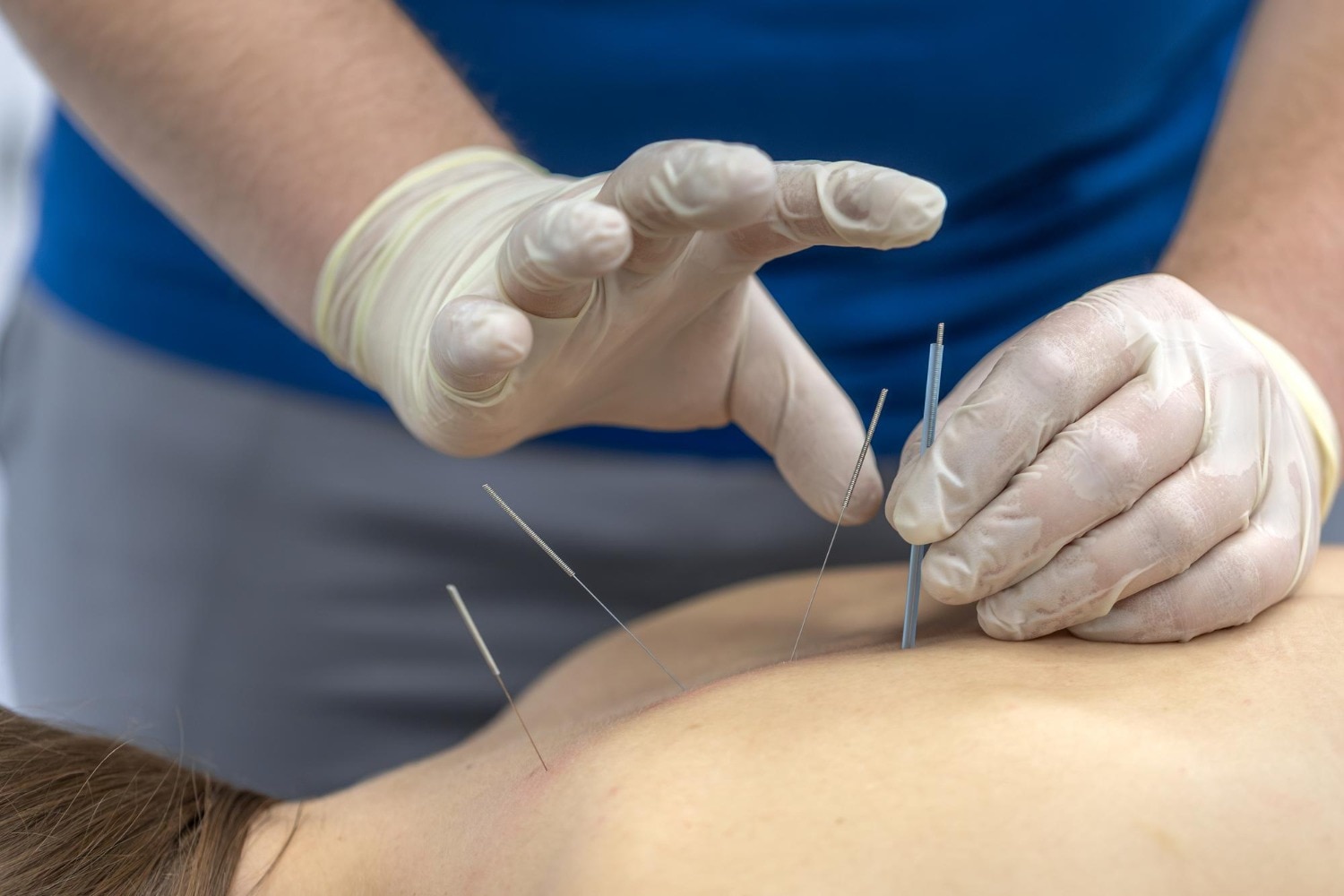
| Physiotherapy dry needling | A sterile, single-use solid filiform needle stimulates a taut band, trigger point, or painful tissue | Targets a musculoskeletal finding identified during examination |
| Trigger-point needling | Needling directed at a painful, palpable muscle trigger point | Often describes the target within dry needling |
| Acupuncture | Needles are selected through a separate traditional-medicine diagnostic system | It is not simply dry needling under another name |
| Injection-based procedure | A hollow needle delivers medicine or another substance | Requires a different medical indication, consent, and risk discussion |
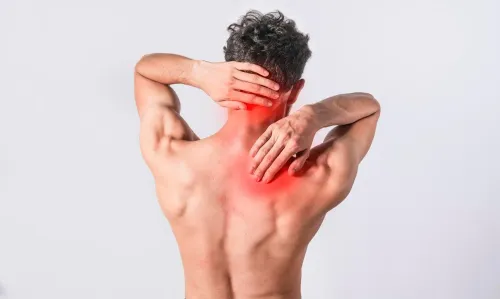
A trial fits better when you have a palpable taut band or trigger point, pain reproduced by pressing one muscle or performing a particular movement, local stiffness, restricted movement, or muscle-related neck and shoulder pain. These findings support a muscular contribution; they do not prove it is the only cause.
A scan showing a disc bulge or degeneration does not establish that needling treatment in Pune is appropriate. The decision should follow your history, neurological examination, movement findings, and functional limitations—not the scan alone.
Dry needling for back pain is usually an adjunct to rehabilitation, not a stand-alone cure. Short-term relief does not prove the underlying cause is corrected, so judge muscle pain needling therapy by improved walking, sitting, lifting, sleep, or movement.
How to distinguish a treatable muscle pattern from a warning sign
Pain is more suitable for elective needling when it is localized, linked to movement, and reproduced by pressing a palpable taut band or one specific muscle. Restricted movement and muscle tenderness support a muscular contribution, but they do not exclude nerve, joint, disc, fracture, infection, inflammatory, organ-related, or cancer-related disease.
Radiating pain with numbness or tingling suggests nerve involvement; progressive leg weakness needs prompt neurological assessment. Pain unrelated to movement, severe night pain, abdominal or urinary symptoms, or pain after substantial trauma requires a broader medical review before anyone needles the painful area.
A disc bulge on a scan does not prove that needling is appropriate.
Seek urgent medical review for:
- New bladder or bowel control problems
- Numbness around the saddle area
- Progressive leg weakness
- Fever or systemic illness
- Major trauma
- Unexplained weight loss
- A personal history of cancer or serious infection
These features can signal serious spinal or non-spinal disease, so do not treat them as a trigger point.
Before needling neck or shoulder pain, the clinician should check for cervical nerve-root symptoms, shoulder pathology, and non-musculoskeletal causes such as chest or visceral disease. This screening belongs in neck shoulder rehabilitation in Pune as well as back pain physiotherapy in Pune.
The practical question is not whether a needle can reach the painful spot, but whether the examination identifies a safe, plausible target.
What happens during a needling session and who needs extra caution
Expect an assessment before any needle. Whether you seek needling treatment in Pune or neck shoulder rehabilitation in Pune, the practitioner must first decide that the target is safe and plausible.
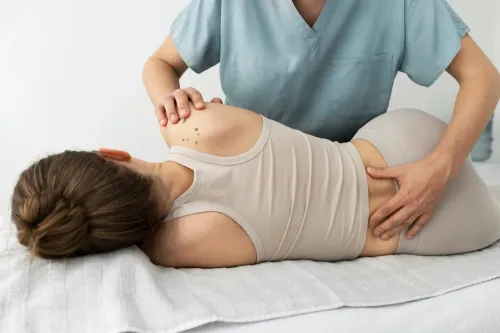
1. You will give your history and answer red-flag questions. The practitioner checks movement, strength, sensation, reflexes, and neurological symptoms, then explains the proposed muscle or tissue and obtains informed consent.
2. You are positioned comfortably. After hand hygiene and skin preparation, the practitioner uses a sterile, single-use needle, observes any local muscle response, removes the needle, and places it immediately in a sharps container.
3. The practitioner reassesses your movement or pain and prescribes follow-up exercises. Temporary soreness, bruising, minor bleeding, fatigue, or light-headedness can occur. Seek help for severe or persistent symptoms, increasing redness, warmth, swelling, pus, or fever.
4. For upper-back, shoulder, chest-wall, or lower-neck needling, new chest pain, shortness of breath, cough, or breathing difficulty requires urgent evaluation because pneumothorax is rare but serious.
Tell the practitioner about anticoagulants or other blood-thinning medication, bleeding disorders, impaired sensation, compromised immunity, skin infection, uncontrolled diabetes, pregnancy-related concerns, recent surgery, needle phobia, or difficulty communicating symptoms. These factors do not all prohibit treatment, but they change the risk assessment and may favour another plan.
Choose a trained practitioner who understands regional anatomy and uses proper infection control.
When exercise, manual therapy, medication, or another option comes first
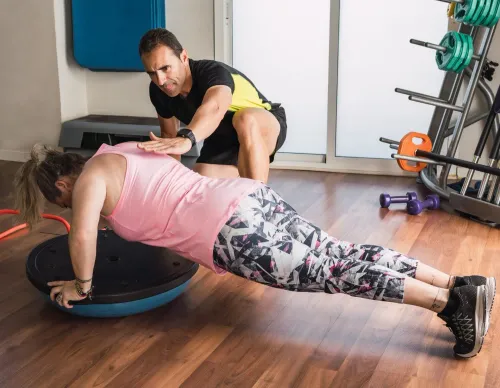
Progressive exercise and self-management come first for persistent low-back pain. Build trunk and hip strength or endurance, address relevant mobility limits, adjust sleep and work demands, and return gradually to normal activity.
Consider needling when localized muscle pain prevents exercise and short-term relief would help you participate, not as a replacement for load management or rehabilitation.
| Option | What it offers | When it applies |
|---|---|---|
| Exercise | Progressive strength, endurance, mobility, and activity exposure | Foundation for persistent back pain |
| Manual therapy | Hands-on movement or symptom relief | Only within an exercise-based package |
| Heat | Temporary comfort and movement preparation | Before activity when stiffness limits movement |
| Medication | Symptom control after medical review | When pain prevents sleep or participation |
| Massage | Short-term symptom relief | As an adjunct, not corrective treatment |
| Acupuncture | A separate traditional-medicine intervention | NICE recommends not offering it for low-back pain |
| Injection procedures | Treatment with procedure-specific risks | Only for a different medical indication after assessment |
NICE recommends exercise and self-management, and permits manual therapy only alongside exercise. Its acupuncture recommendation does not automatically settle evidence for physiotherapy dry needling, which is a separate intervention. Muscle pain needling therapy should have a defined trial goal, such as walking farther, sitting longer, lifting, sleeping, or completing a named movement.
Needling cannot repair a fracture, remove a disc prolapse, treat infection, or correct cancer or organ disease. A brief pain reduction is not proof that the underlying problem has been corrected; stop repeating sessions if function does not improve during an agreed short trial.
How to choose a safe provider and judge whether needling is helping
A safe booking starts with questions, not a promise of instant relief. Ask who performs the procedure, their dry-needling training, the exact region to be treated, the proposed number of sessions, expected risks, alternatives, infection-control process, and the exercise plan that follows.
Confirm that the practitioner uses hand hygiene, sterile single-use needles, and a sharps container.
- Ask what finding makes needling suitable for your symptoms.
- Ask how progress will be measured beyond pain immediately after treatment.
- Agree on a short trial, a functional goal, and a review date.
- Tell the practitioner about medicines, bleeding problems, pregnancy, impaired sensation, infection, recent surgery, or other health conditions.
- Stop and seek reassessment if symptoms change, weakness develops, or the agreed goal is not improving.
| Measure | Useful record | Reassess if |
|---|---|---|
| Walking | Distance or time before symptoms limit you | No meaningful gain after the agreed trial |
| Sitting | Minutes tolerated at work or home | Tolerance remains unchanged |
| Lifting | Weight or named task completed safely | Function does not progress |
| Sleep or movement | Night waking, range of motion, or a named task | Relief lasts only hours without functional change |
For someone comparing back pain physiotherapy in Pune with needling treatment in Pune, Dr Hiremaths Dental And Physiotherapy clinic is a place to discuss whether needling belongs in a rehabilitation plan, after red-flag screening, history review, alternatives, and exercise planning. Repeated sessions without a defined outcome add cost and can delay diagnosis or active care.
Related service
Physiotherapy Get personalized physiotherapy for back pain and reclaim your active life. View service → |
Frequently asked questions
What does needling therapy mean for back pain?
It can refer to dry needling, acupuncture, or another technique. Ask what will be inserted, where it will go, and the intended result.
Which back-pain symptoms need medical review before needling?
Seek medical assessment first for new leg weakness, loss of bladder or bowel control, numbness around the saddle area, fever, major trauma, or unexplained weight loss.
What happens during a needling session?
The provider reviews your symptoms, explains the technique, obtains consent, cleans the skin, inserts sterile single-use needles, and checks your response before giving aftercare advice.
When should exercise or manual therapy come before needling?
Exercise or manual therapy often comes first when pain responds to movement, strength and mobility are the main limitations, or needling has not produced measurable functional improvement.
How can you tell whether needling is helping?
Track specific changes such as walking time, bending range, sleep, or lifting ability over several sessions rather than judging treatment by temporary post-session soreness.
Keywords